The Ophelia Survival Garden
A drought-resilient show garden for BBC Gardeners’ World Fair 2026
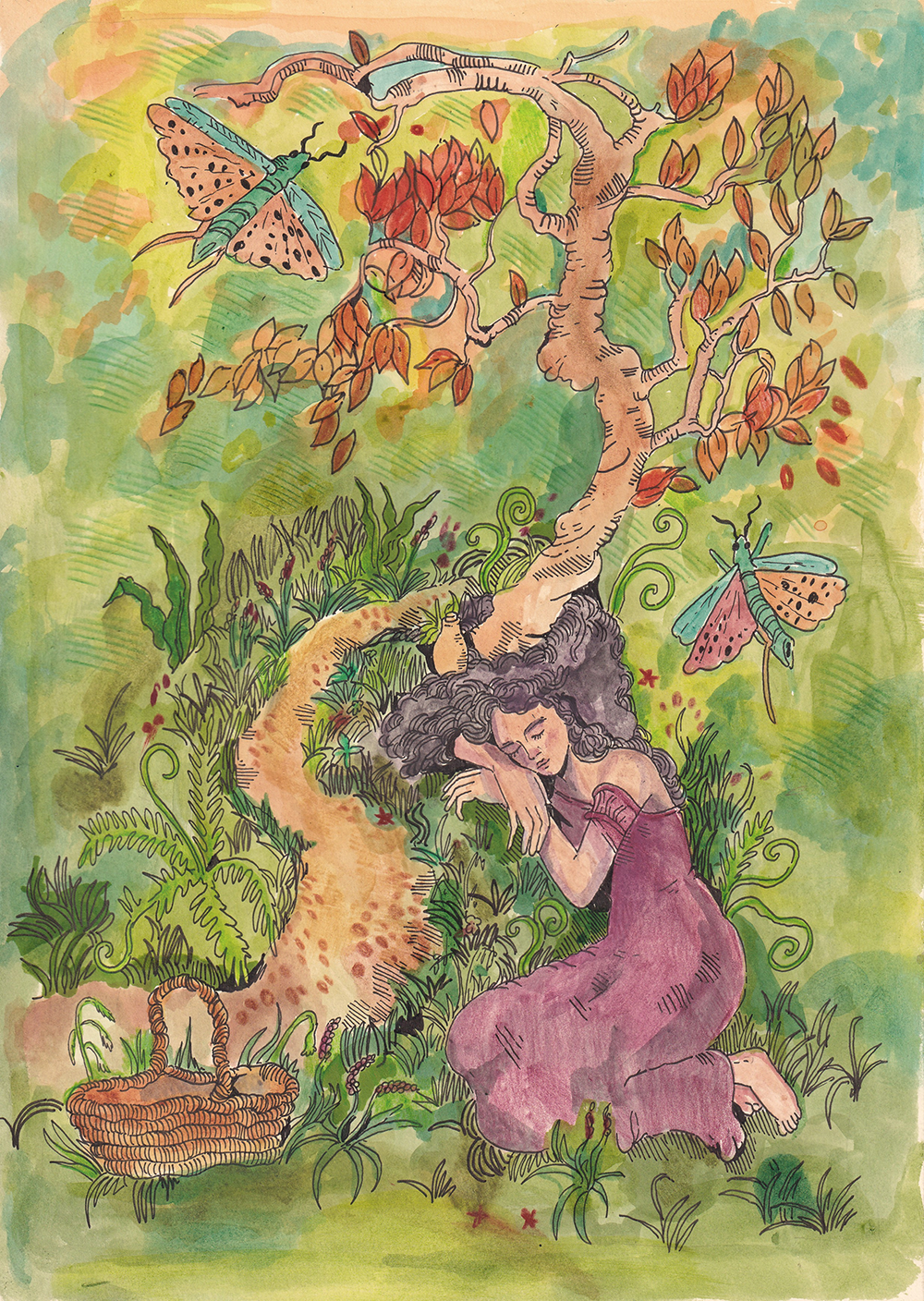
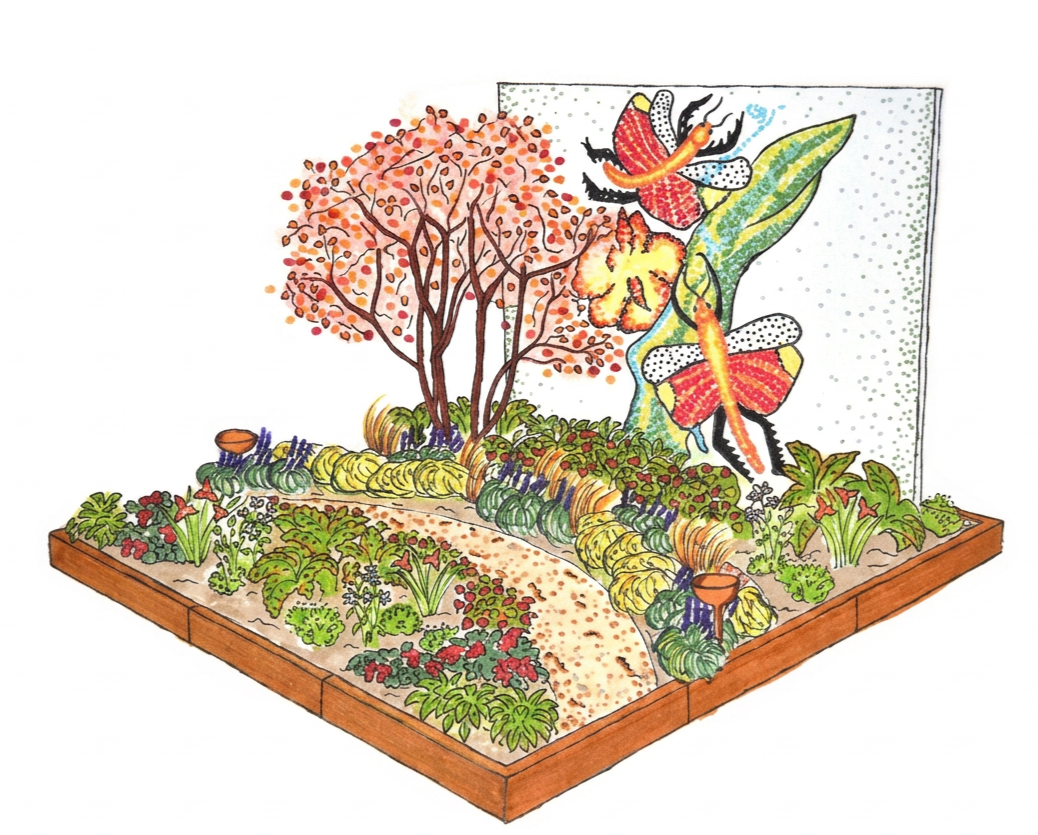
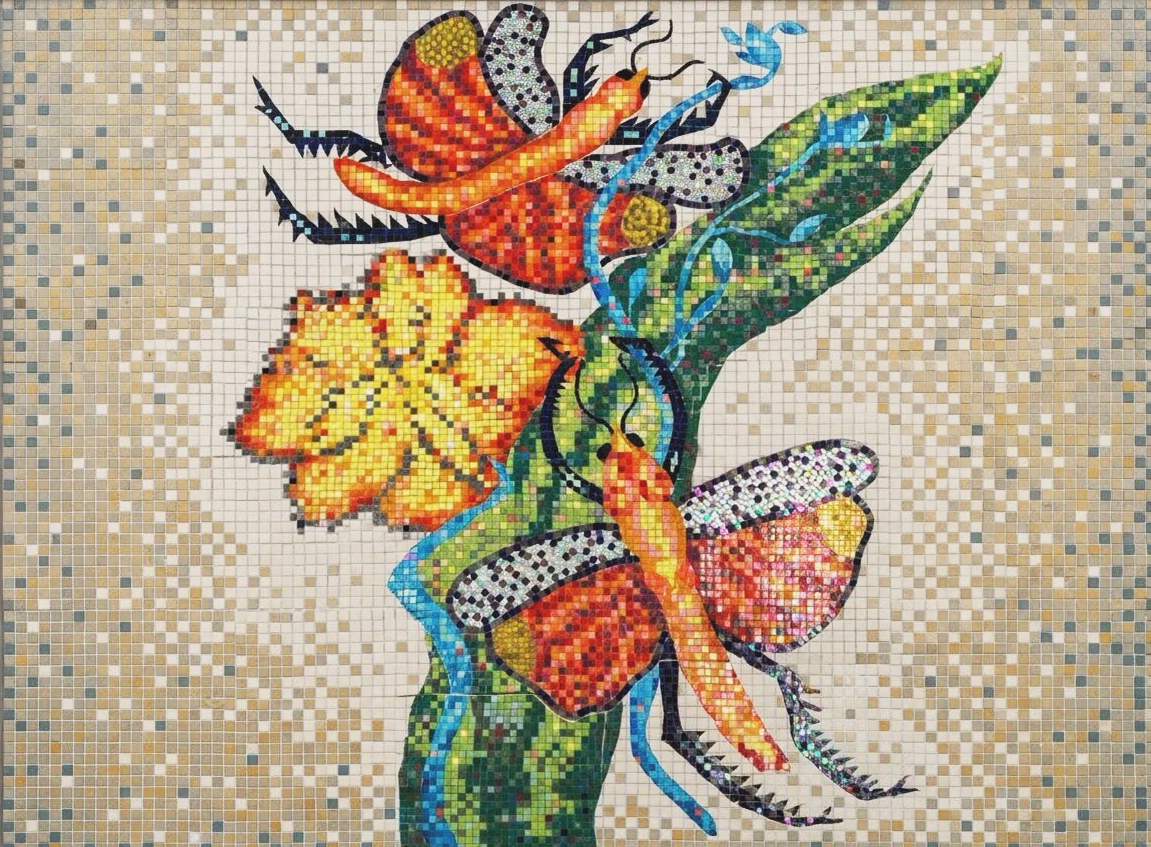
Inspired by a dream about Shakespeare’s Ophelia, this garden imagines a world where water has disappeared. In this drought-resilient space, olla pots release water slowly, nourishing the woodland ferns, cyclamen and Juneberry tree. A locust mosaic offers a living example of survival through water scarcity.
After the fair, this garden will not go to waste. Its plants will grow on in Wilder’s community sites in Bermondsey, so people, nature and wildlife can benefit for years to come.
Once upon a time, Ophelia was driven to the water's edge. Now the water is gone - dried up by a changing climate. She cannot drown. So she survives differently. This dry shade woodland garden imagines how. Every plant endures without visible water. Grasses move like rivers without needing them. Ferns remember damp woodland. Hidden clay pots underground release water slowly to the roots below. The mosaic depicts locusts: creatures that survive without visible water, drawing moisture from within. Like Ophelia. Like this garden. Pick up a stone from the bowl. Each carries a word from a poem. Carry it across the garden. You are doing what Ophelia did: surviving, moving through.
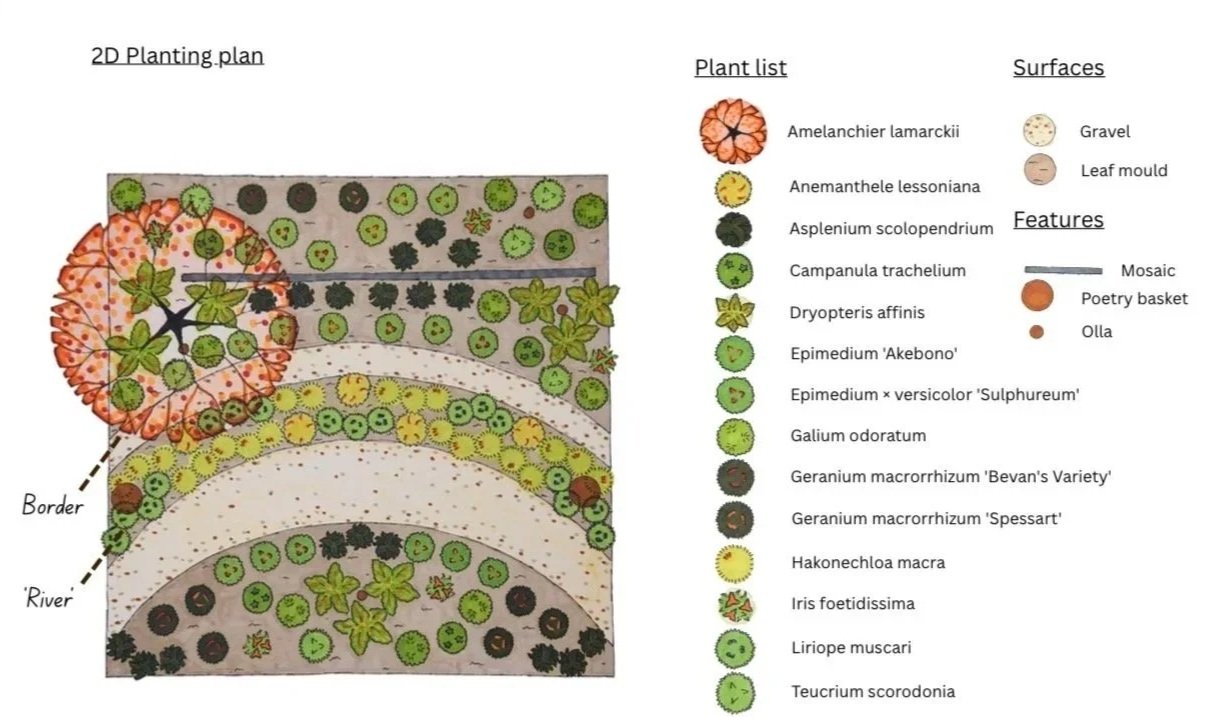
Plant list
Snowy Mespilus — Amelanchier lamarckii
Big blue lily turf — Liriope muscari
Wood sage — Teucrium scorodonia
Ivy-leaved cyclamen (white) — Cyclamen hederifolium
Hart's-tongue fern — Asplenium scolopendrium
Scaly male fern — Dryopteris affinis
Japanese forest grass — Hakonechloa macra
River oats — Chasmanthium latifolium
Hosta — Hosta 'Krossa Regal'
Coral bells — Heuchera 'Caramel'
Barren wort — Epimedium 'Akebono'
Barren wort — Epimedium × versicolor 'Sulphureum'
Cranesbill — Geranium macrorrhizum 'Bevan's Variety'
Cranesbill — Geranium macrorrhizum 'Spessart'
Stinking iris — Iris foetidissima
Sweet woodruff — Galium odoratum
Pheasant's tail grass — Anemanthele lessoniana
Nettle-leaved bellflower — Campanula trachelium

Project Team
Leanne Werner, Creative Direction and Project Lead
Alex Freeman, Landscape Design and Production
Alice Sykes, Illustrator
Mosaic fabricator
Giulia Vogrig and Rada Stilianova (GIRAPA) with children from Southwark Schools

Plant sponsors